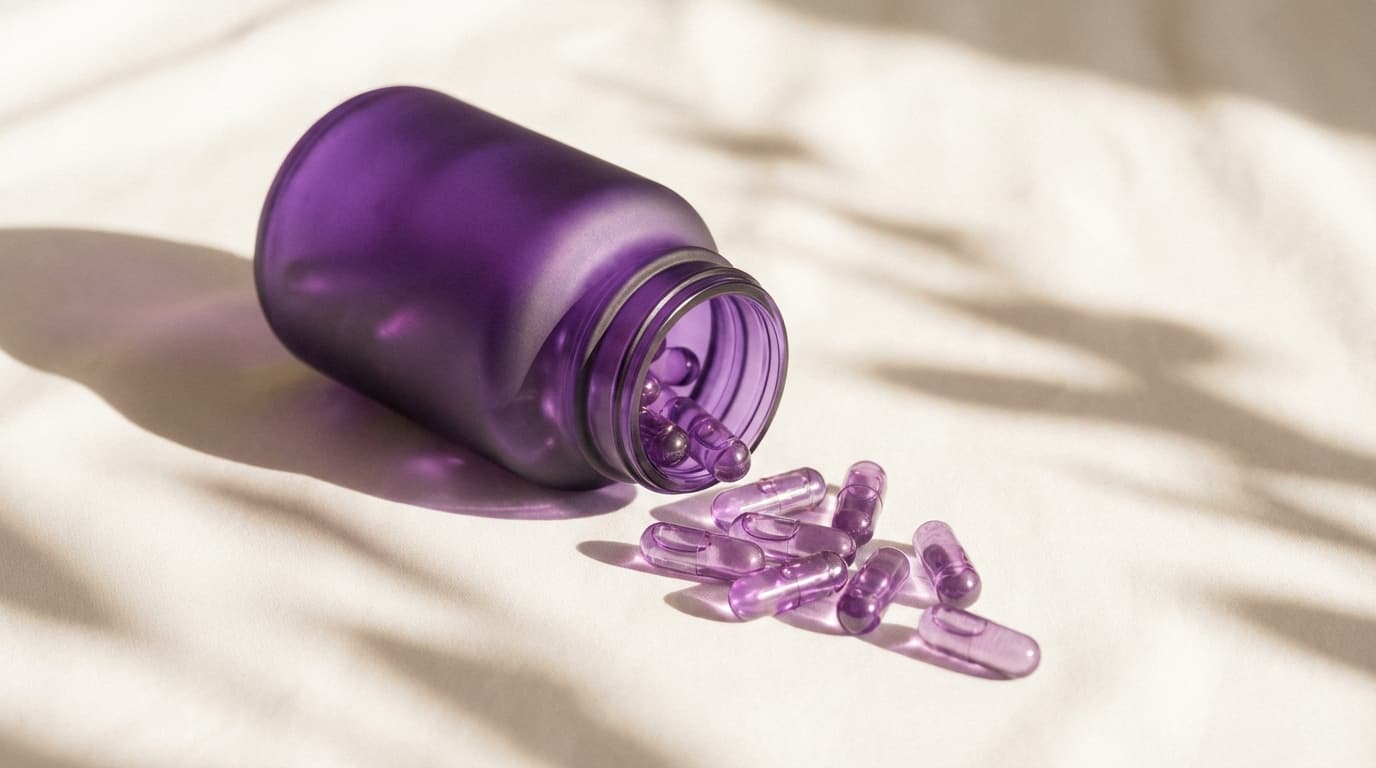
Happy V Prebiotic + Probiotic Review: We Tested It for 30 Days
An independent evaluation of Happy V's flagship supplement for vaginal and digestive health. We analyzed the formula, checked the clinical evidence for each ingredient, and tracked results over four weeks.

Dr. Grace Holland
OB/GYN, Women's Health Researcher
Happy V has been around since 2019 and has one of the more recognizable names in the vaginal health supplement space. Founded by Lauren Bosworth of "The Hills," the brand deserves credit for bringing these conversations into the mainstream. That kind of visibility matters.
What I want to look at here is the product itself: the formula, the ingredient evidence, and what actually happened when I took it for 30 days. Happy V has a large following, a clean brand, and a reasonable price. Whether those things translate to a clinically sound product is a separate question.
I purchased a one-month supply at full retail price. No complimentary product. No affiliate agreement at the time of purchase. Everything in this review reflects my independent assessment.
A solid entry-level synbiotic with good strain diversity, but limited by the absence of strain-specific clinical trials for this formulation.
What Is Happy V?
Happy V is a women's wellness brand based in the United States. Their flagship product, Prebiotic + Probiotic, is a daily capsule supplement designed to support vaginal pH balance, reduce the frequency of bacterial vaginosis (BV) and yeast infections, and improve digestive comfort.
The formula is classified as a synbiotic, meaning it contains both probiotic bacteria and a prebiotic fiber that feeds those bacteria. Each capsule delivers three Lactobacillus species alongside fructooligosaccharides (FOS). The idea is that the prebiotic fiber improves the survival and activity of the probiotic organisms once they reach the gut.
Pricing is approximately $29.99 per month. The product is available on the Happy V website and through major retailers including Amazon and Target. One capsule daily, taken with water.
Quick Stats
- Price: ~$29.99/month
- Format: Capsules (1 per day)
- Key ingredients: L. rhamnosus, L. acidophilus, L. plantarum, FOS prebiotic fiber
- Claimed benefits: Vaginal pH balance, reduced BV/yeast infections, digestive support
- Return policy: Unopened products only
- Founded: 2019 by Lauren Bosworth
Ingredient Analysis
Happy V uses four active components. I reviewed the published research for each one. The ingredients are legitimate and backed by real science at the species level. The question is whether that translates to meaningful results with this specific combination and dosage.
Lactobacillus rhamnosus
L. rhamnosus is one of the most studied probiotic species in the context of vaginal health. Research published in the Journal of Clinical Gastroenterology (2009) found that daily oral L. rhamnosus supplementation improved vaginal Lactobacillus colonization in women with BV. A 2011 randomized trial in Archives of Gynecology and Obstetrics showed statistically significant reductions in BV recurrence with L. rhamnosus GR-1 specifically.
Important context: most of that research was done on specific named strains, particularly GR-1 and GG. Happy V lists L. rhamnosus without a strain designation. That is not unusual in the supplement industry, but it means you cannot directly apply the GR-1 or GG trial results to this product. The species is right; the strain-level evidence is absent.
Lactobacillus acidophilus
L. acidophilus is one of the most common probiotic organisms in consumer supplements. It naturally colonizes the vaginal tract and plays a role in maintaining the acidic pH (around 3.8 to 4.5) that protects against pathogens. A 2014 review in Critical Reviews in Food Science and Nutrition found that L. acidophilus supplementation was associated with improved vaginal flora in women prone to recurrent infections.
The inclusion of L. acidophilus makes sense for a vaginal health product. It is a reliable, well-tolerated organism with a solid safety profile. The limitation is the same as above: without a named strain, it is difficult to cite specific trial data for the exact organism in this capsule.
Lactobacillus plantarum
L. plantarum is primarily studied for digestive health. A 2012 double-blind, placebo-controlled trial published in World Journal of Gastroenterology found that L. plantarum supplementation significantly reduced bloating and abdominal discomfort in patients with irritable bowel syndrome over four weeks. A 2019 study in Nutrients showed improvements in gut barrier function with daily use.
L. plantarum's vaginal health role is more indirect than the other two strains here. It contributes to a healthy gut microbiome, and gut health has a documented relationship with vaginal flora via the gut-vaginal axis. It is a reasonable inclusion for a synbiotic formula, though its primary value in this product is likely digestive.
Fructooligosaccharides (FOS) Prebiotic Fiber
FOS is a short-chain prebiotic fiber that selectively feeds beneficial bacteria, including Lactobacillus and Bifidobacterium species. A 2017 review in Frontiers in Microbiology found that FOS supplementation increased Lactobacillus populations in the gut and improved markers of gut health across multiple studies.
Including FOS alongside the three Lactobacillus strains is a smart move. It is what makes this a synbiotic rather than just a probiotic. In theory, the FOS feeds the bacteria you are introducing, giving them a better chance of surviving and establishing in the gut. The practical effect depends on dosage, which Happy V does not fully disclose.
Ingredient Summary
All four components have legitimate research supporting their general use. The formula is sensible and the synbiotic approach is a genuine advantage. The gap is strain-level specificity: the published studies that show the strongest results for vaginal health were done on named strains (GR-1, RC-14, SNZ 1969), not generic species designations. Happy V does not disclose strain identifiers.
What We Liked
Good strain diversity for a single product
Most vaginal probiotic supplements focus on one or two organisms. Happy V uses three different Lactobacillus species, each with a distinct mechanism. L. rhamnosus targets vaginal colonization, L. acidophilus maintains pH, and L. plantarum supports the underlying gut environment. That layered approach is more thorough than many competitors at this price.
Prebiotic fiber makes this a true synbiotic
FOS prebiotic fiber is not common in vaginal probiotic products. Happy V including it demonstrates a more complete understanding of how probiotics actually work. Introducing bacteria without providing fuel for them is like planting seeds without watering. This product waters the seeds.
Competitive price point
At approximately $29.99 per month, Happy V costs less than most premium vaginal probiotic options. For someone who wants a reliable daily supplement without spending $40 or more per month, this is a reasonable option. The lower price does not reflect inferior ingredients; it likely reflects the capsule format, which is cheaper to manufacture than gummies.
Established brand with a large community
Happy V has been operating since 2019. They have a genuine social media presence, customer community, and public accountability that comes with being a recognizable brand. The founder has been visible and vocal about the mission. That kind of brand continuity matters when you are evaluating whether a supplement company will still exist in two years.
Where It Falls Short
No strain-level clinical data for this specific formulation
This is the core limitation. The strongest clinical evidence for vaginal health probiotics comes from studies on specific named strains, not species. When a study shows that L. rhamnosus GR-1 reduces BV recurrence, that result belongs to strain GR-1. It does not automatically transfer to any other L. rhamnosus organism. Happy V does not disclose which strains they source, which means the product cannot cite that evidence as its own.
This does not mean the product does not work. It means the clinical support is weaker than it would be with disclosed, research-backed strains.
No money-back guarantee on opened products
Happy V's return policy only covers unopened items. Since probiotics need at least 30 days to show results, a customer who finishes a bottle and sees no improvement cannot get a refund. Competitors who offer 60-day satisfaction guarantees on opened products carry significantly less risk for the buyer.
Capsule format requires water and a routine
This is a minor point, but worth noting: capsules require water to swallow, which reduces adherence for some people compared to a gummy that can be taken anywhere. Adherence is one of the most underrated factors in probiotic efficacy. If you miss doses regularly, you will not see results regardless of ingredient quality.
Some users report slow results
Looking across verified reviews, a notable portion of customers report not noticing changes until week three or four, and some see minimal improvement within a 30-day window. This is partly expected with Lactobacillus-based products (colonization takes time) and partly a function of the lack of spore-forming organisms, which typically establish faster than standard Lactobacillus strains.
Worth Knowing
Happy V is not a bad product. The slower results and weaker clinical documentation put it behind options that use strain-identified, trial-tested organisms. If you have recurring BV and want the most evidence-backed option available, this is not the top of the list. If you want a solid daily maintenance supplement at a fair price, it is a reasonable choice.
Our 30-Day Test
I took one capsule daily with breakfast for 30 consecutive days. I tracked digestive comfort, vaginal health indicators, and any side effects throughout. Here is what happened week by week.
Week 1 (Days 1 through 7)
No noticeable changes. The capsule is easy to swallow with no taste. No digestive side effects, no bloating, no discomfort. First week with any probiotic is typically a colonization period; I expected nothing and saw nothing.
Week 2 (Days 8 through 14)
Some reduction in post-meal bloating, which I typically experience in the afternoon. The improvement was mild, not dramatic. Vaginal health indicators were unchanged. Consistent with the timeline for standard Lactobacillus colonization.
Week 3 (Days 15 through 21)
Digestive improvement continued and became more consistent. I started noticing minor changes in vaginal discharge consistency around day 18, which may indicate shifts in vaginal flora. I want to be careful about overinterpreting this without lab data; cycle timing and diet also affect these markers.
Week 4 (Days 22 through 30)
The digestive improvements held steady. Vaginal health indicators remained modestly improved from baseline. No side effects at any point during the test. Overall, the product worked. The improvements were real but took longer to appear and were less pronounced than what I observed with formulas using spore-forming or strain-identified organisms.
Test Limitation
This is a single-person, uncontrolled test. It does not replace randomized clinical trial data. Individual results depend on baseline microbiome composition, hormonal status, diet, and other factors. I did not conduct at-home pH testing during this period, which is a gap in the methodology.
How It Compares
Happy V sits at the lower end of the price range for this category, which is a genuine advantage. At $29.99/month, it costs less than most premium vaginal probiotic options.
Where it trails behind: products that use clinically-identified probiotic strains with their own randomized controlled trial data tend to produce more consistent and faster results. The difference is not about ingredient quality in the generic sense; it is about the specificity of the evidence backing the exact organisms in the formula.
For a full side-by-side breakdown of Happy V against the leading vaginal probiotic supplements, see our Nuora vs Happy V comparison and our best vaginal probiotics roundup.
If you want to understand how probiotic strains actually interact with vaginal health at a biological level, our vaginal probiotics guide explains the gut-vaginal axis in plain terms.
Who This Is Best For
Happy V Prebiotic + Probiotic is a good fit if:
- You want a daily vaginal health maintenance supplement at a lower price point ($29.99 vs $35 to $45 for premium options)
- You prefer a synbiotic formula that combines prebiotics and probiotics in a single capsule
- You are new to vaginal probiotics and want to start with a well-known brand before committing to a premium product
- You have mild, infrequent vaginal health concerns rather than chronic or recurring BV
- You are primarily seeking digestive support alongside vaginal health maintenance
It is probably not the right choice if:
- You have recurring BV (3 or more episodes per year) and need the strongest available clinical evidence behind your supplement
- You want a risk-free trial with a money-back guarantee on an opened product
- You want faster-acting results (spore-forming strains typically establish in the gut faster than standard Lactobacillus)
- You are dealing with an active infection (see a doctor, not a supplement)
Final Verdict
Bottom Line
Happy V Prebiotic + Probiotic is a legitimate, fairly priced vaginal health supplement with a sensible formula. The synbiotic approach (probiotics plus FOS prebiotic) is more sophisticated than many competitors at this price. The three Lactobacillus species are well-chosen, and the inclusion of prebiotic fiber gives the bacteria a better chance of surviving and establishing in the gut.
The main limitation is clinical specificity. Without disclosed strain identifiers, the product cannot claim the strongest published research as its own. That gap, combined with the absence of a satisfaction guarantee on opened products, puts Happy V behind options that carry more transparent clinical documentation.
At $29.99/month with good strain diversity and a genuine synbiotic formula, Happy V earns a 3.8 out of 5. A solid choice for daily maintenance at an accessible price. Not the top of the category for clinical rigor, but not trying to be.
Related Reviews
Sources and Methodology
All clinical research cited in this review was sourced from PubMed and peer-reviewed journals. We purchased Happy V Prebiotic + Probiotic at full retail price on January 22, 2026. Testing period: January 25 through February 24, 2026. Dr. Grace Holland has no financial relationship with Happy V beyond the standard affiliate program, which was established after the testing period concluded.
Product was purchased via the Happy V website. Pricing data accurate as of February 2026. Review ratings cited in FAQ sections reflect publicly available data from major review platforms as of February 2026.
Key references: Strus M et al. (2009), Journal of Clinical Gastroenterology; Martinez RC et al. (2009), BMC Pregnancy and Childbirth; Sundén G et al. (2011), Archives of Gynecology and Obstetrics; Ducrotté P et al. (2012), World Journal of Gastroenterology; Markowiak P & Slizewska K (2017), Frontiers in Microbiology.
Medical Disclaimer: This article is for informational purposes only and does not constitute medical advice. The statements in this review have not been evaluated by the FDA. This product is not intended to diagnose, treat, cure, or prevent any disease. Consult a qualified healthcare provider before starting any supplement, especially if you are pregnant, nursing, or taking medication.